


Serving Campbell Heights 24/7

Campbell Heights Commercial Snow Removal

Commercial snow clearing and ice management for Campbell Heights business parks and industrial properties in South Surrey. Priority plowing for parking lots, loading areas, sidewalks and access roads.

24/7 Monitoring
WorkSafeBC Insured
GPS-Tracked Fleet
Strata & property managers

Wow-level winter service for Campbell Heights strata properties

Keep residents moving with proactive plowing, walkway clearing, de-icing, and documented 24/7 storm response from one accountable local crew.

Storm monitoring WorkSafeBC insured
PlowWow mascot waving with a snow shovel

PlowWow on the ground

Snow Removal in Campbell Heights, the PlowWow Way

Watch our short field-operations film, then explore the local routes, equipment and service plan PlowWow uses to keep Campbell Heights strata, commercial and residential properties moving through winter weather.

Video summary: a 10-second PlowWow snow-removal brand film showing professional winter-service readiness, branded equipment and a coordinated response built for Lower Mainland storms.

PlowWow snow and ice operations serving Campbell Heights, British Columbia.

Campbell Heights at a Glance

City Hall pinned for orientation, plus a quick link to live Campbell Heights weather.

Campbell Heights Service Map

Pinned: Campbell Heights City Hall — 192 Street & 24 Avenue, Surrey

Directions to our Campbell Heights service area

Enter a starting address to see the estimated driving distance to Campbell Heights City Hall, and open turn-by-turn directions in Google Maps.

Open in Google Maps

Campbell Heights's Winter, by the Numbers

Typical monthly snowfall and the neighborhoods we dispatch first.

Monthly Snowfall (cm)

Average accumulation across Campbell Heights.

Priority Neighborhoods

Where Campbell Heights crews dispatch first when a storm triggers.

  • 192 Street corridor

    Warehouses, logistics facilities and business parks

  • 24 Avenue

    Industrial campuses and employee parking areas

  • Grandview Heights

    Commercial properties and mixed-use access routes

  • South Surrey industrial area

    Large lots, loading zones and internal roads

The Campbell Heights Fleet

Right-sized iron for every Campbell Heights property — from highway-grade plow trucks to skid steers and walk-behind salters for tight courtyards.

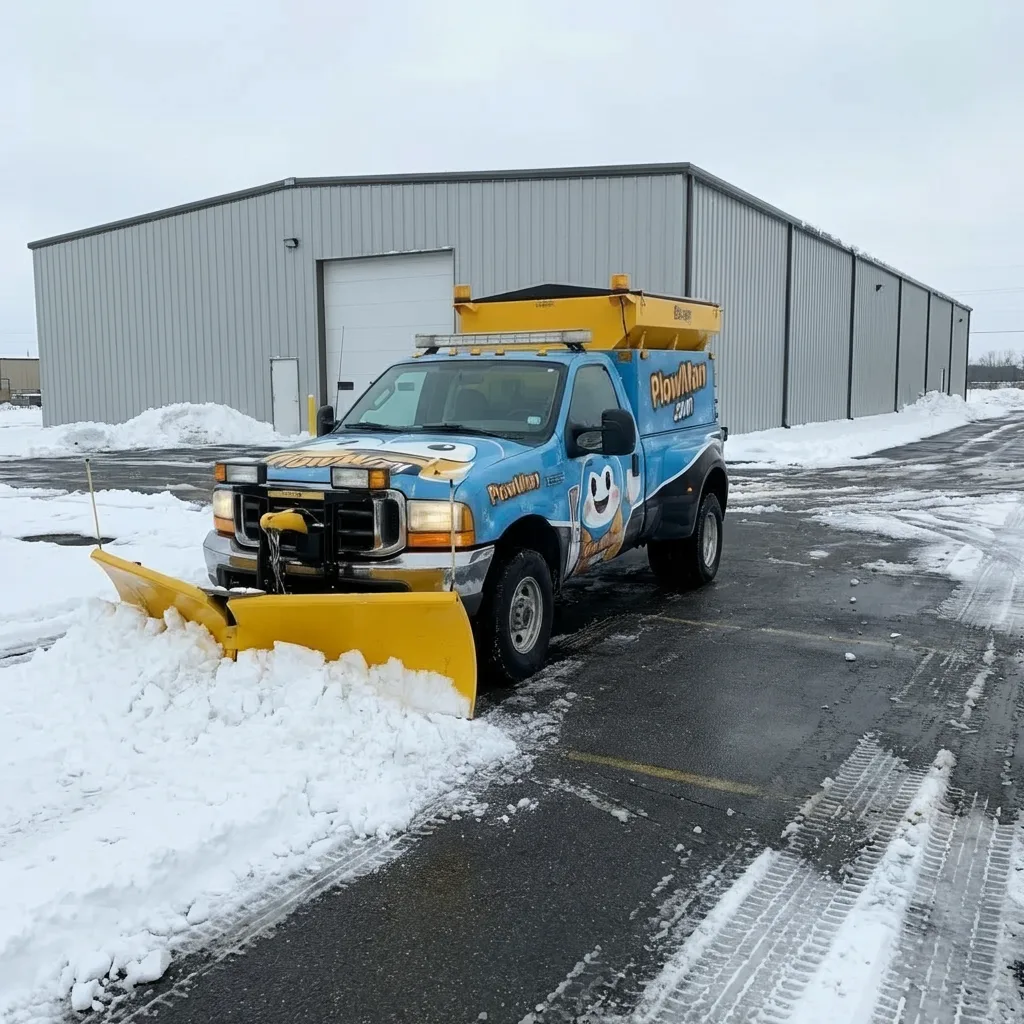
F-350 plow + V-box salter dispatched across Campbell Heights
Branded skid steer for Campbell Heights loading docks & lots
Tracked dozer for heavy Campbell Heights accumulations

Campbell Heights Snow Removal — Operational Overview

Campbell Heights Commercial Snow Removal. Commercial snow clearing and ice management for Campbell Heights business parks and industrial properties in South Surrey. Priority plowing for parking lots, loading areas, sidewalks and access roads. This page exists to give property managers, strata councils, facility directors and individual homeowners in Campbell Heights a complete operational picture of how PlowWow approaches winter service in this specific city — not a generic Lower Mainland overview, but the documented playbook our crews follow on the ground here.

Vancouver's coastal Pacific maritime climate keeps the city near the freezing point through most snow events, so a single storm cell often delivers wet snow, freezing rain, and slush within the same hour. The result is a glassy melt-and-refreeze cycle on sidewalks, transit platforms and seawall-adjacent commercial frontages that demands aggressive proactive salting rather than reactive plowing alone.

Hemmed in by Burrard Inlet, the Fraser River, English Bay and the North Shore mountains, Vancouver compresses a half-million people onto a peninsula whose elevation rarely exceeds 150 metres. That shape funnels marine air across the city in narrow corridors, so neighborhoods only kilometres apart can see materially different snow totals during the same event.

Across an average winter, Campbell Heights sees roughly 43 cm of cumulative snowfall distributed across the November-through-March window, with peak accumulation typically arriving in Dec. Those numbers understate the operational reality, however, because what determines vendor performance is not seasonal totals but the per-event response sequence — pre-storm preparation, in-storm dispatch, post-storm cleanup, and the documentation that ties all three together for insurance, AGM and depreciation-report purposes.

Every section below is calibrated to Campbell Heights specifically. Where a section references neighborhoods, those are the neighborhoods we actually dispatch into. Where it references chemistry, equipment, response times or contract structures, those are the ones we use here today, not generic industry descriptions. If anything in the document is unclear or you would like to discuss its application to your specific property, the form at the bottom of the page connects directly to our dispatch coordinator.


Why Campbell Heights Winter Service Is Different

Campbell Heights's winter weather behaves the way it does for specific reasons that matter to anyone responsible for clearing it. Outflow winds from the Fraser Valley occasionally pour cold air into the city through Burrard Inlet, dropping surface temperatures well below the marine forecast and turning otherwise routine rain into rapid black-ice formation. Crews monitor SurreyTeck weather stations and Environment Canada outflow advisories so dispatch precedes — not chases — those temperature drops.

PlowWow has dispatched in Vancouver every winter since the company was founded, and our oldest continuous strata contracts in the city date to the 2008 December storm cycle that paralysed the region for nearly three weeks. Several of those original buildings remain on seasonal contracts today. Continuity of operator and route-manager tenure is one of the highest-leverage variables in winter service quality, because the institutional memory of what worked in a previous comparable event cannot be reconstructed from documentation alone. The longer a city stays in our active routing, the more our crews internalise its specific patterns — the specific block where freezing rain glazes first, the specific approach that drains poorly after a melt, the specific set of properties where overnight re-freeze is a near-certainty given any given forecast.

The practical consequence for property managers in Campbell Heights is that vendor selection should weight institutional experience in the city heavily. A vendor who is excellent in Surrey may not be excellent in Campbell Heights, because the operational variables are different and the documented sequences differ. That is also why our pricing structure rewards multi-year contracts — both we and the customer benefit from the accumulated institutional memory.

Campbell Heights Property Mix and Equipment Loadout

Vancouver's snow-removal demand is dominated by mid- and high-rise strata towers, mixed-use retail frontages on Robson, Main, Commercial and West 4th, and ground-level commercial along the Broadway corridor. Single-family residential service concentrates in Kitsilano, Point Grey, Dunbar and the East Side grid where private driveways and laneways multiply route stops.

That property mix shapes both the equipment loadout we maintain in Campbell Heights and the dispatch sequencing we follow during events. Tower-dense submarkets get loader-and-bobcat pairings with brine-first chemistry; family-residential submarkets get pickup-mounted plows with V-box salters; commercial frontages get tow-behind brine sprayers with pre-storm application; industrial yards get dedicated equipment staged on site. The mix is calibrated to the city's actual property distribution rather than to a generic Lower Mainland template.

For property managers and strata councils evaluating vendors in Campbell Heights, the relevant question is whether a prospective vendor's equipment loadout and operator allocation matches the property type. Vendors who quote a single loadout across all submarkets in the city will under-perform on at least one of the submarket types — typically the most operationally demanding one, which is often the one with the highest insurance exposure.

Campbell Heights Transit, Commute and Service Windows

TransLink SkyTrain stations, bus exchanges at Main-Science World, Commercial-Broadway and Broadway-City Hall, and Aquabus terminals all feed pedestrian volumes onto private commercial frontages within minutes of dawn. Service windows therefore close earlier in Vancouver than in suburban cities — most retail and strata sites must be cleared and salted by 5:30 a.m.

The practical consequence for Campbell Heights contracts is that service-window timing is more rigid than seasonal averages suggest. A property that misses a 06:00 commercial-clear window or a 06:30 transit-adjacent strata window is not in the same operational position as a property cleared by 09:00 — pedestrian incident frequency between those windows is materially higher, and insurance-claim cost-per-incident reflects that reality.

Routing in Campbell Heights is therefore built backward from those windows rather than forward from forecast trigger time. Equipment is staged the previous evening so that dispatch can begin at 03:00 if necessary, and the routing engine sequences properties according to their documented commercial or transit-adjacent timing constraints rather than by simple geographic proximity.

192 Street corridor (Campbell Heights) — Service Detail

192 Street corridor is one of Campbell Heights's most operationally distinct service zones — warehouses, logistics facilities and business parks. The route map for 192 Street corridor is built around the specific access constraints of the neighborhood: arterial feeders, on-street parking density, private-road geometry, and the location of the nearest emergency-services approach. Our routing engine treats 192 Street corridor as an independently triggered sub-zone so that a localized event can dispatch crews without waiting for a citywide trigger.

Equipment loadout for 192 Street corridor reflects the neighborhood's typical frontage type. Tracked skid-steers are used for narrow inner lanes and stair-access strata, wheeled loaders for parkade approaches and commercial parking lots, and pickup-mounted plows with stainless V-box salters for residential cul-de-sacs and laneways. The chemistry plan for 192 Street corridor is calibrated to the neighborhood's predominant surface — engineered concrete, asphalt, painted plaza, or unsealed driveway — rather than applied uniformly across the city.

Documentation for every 192 Street corridor event includes timestamped before-and-after photos at every dispatch point, GPS trace of equipment movement, and a written notation of any anomaly — a parked vehicle blocking an approach, a surface defect created or revealed by clearing, a lighting outage that affected pedestrian flow. That documentation is uploaded to the property manager portal before the operator clears the site, so AGM and depreciation-report integration is automatic rather than reconstructive.

24 Avenue (Campbell Heights) — Service Detail

24 Avenue is one of Campbell Heights's most operationally distinct service zones — industrial campuses and employee parking areas. The route map for 24 Avenue is built around the specific access constraints of the neighborhood: arterial feeders, on-street parking density, private-road geometry, and the location of the nearest emergency-services approach. Our routing engine treats 24 Avenue as an independently triggered sub-zone so that a localized event can dispatch crews without waiting for a citywide trigger.

Equipment loadout for 24 Avenue reflects the neighborhood's typical frontage type. Tracked skid-steers are used for narrow inner lanes and stair-access strata, wheeled loaders for parkade approaches and commercial parking lots, and pickup-mounted plows with stainless V-box salters for residential cul-de-sacs and laneways. The chemistry plan for 24 Avenue is calibrated to the neighborhood's predominant surface — engineered concrete, asphalt, painted plaza, or unsealed driveway — rather than applied uniformly across the city.

Documentation for every 24 Avenue event includes timestamped before-and-after photos at every dispatch point, GPS trace of equipment movement, and a written notation of any anomaly — a parked vehicle blocking an approach, a surface defect created or revealed by clearing, a lighting outage that affected pedestrian flow. That documentation is uploaded to the property manager portal before the operator clears the site, so AGM and depreciation-report integration is automatic rather than reconstructive.

Grandview Heights (Campbell Heights) — Service Detail

Grandview Heights is one of Campbell Heights's most operationally distinct service zones — commercial properties and mixed-use access routes. The route map for Grandview Heights is built around the specific access constraints of the neighborhood: arterial feeders, on-street parking density, private-road geometry, and the location of the nearest emergency-services approach. Our routing engine treats Grandview Heights as an independently triggered sub-zone so that a localized event can dispatch crews without waiting for a citywide trigger.

Equipment loadout for Grandview Heights reflects the neighborhood's typical frontage type. Tracked skid-steers are used for narrow inner lanes and stair-access strata, wheeled loaders for parkade approaches and commercial parking lots, and pickup-mounted plows with stainless V-box salters for residential cul-de-sacs and laneways. The chemistry plan for Grandview Heights is calibrated to the neighborhood's predominant surface — engineered concrete, asphalt, painted plaza, or unsealed driveway — rather than applied uniformly across the city.

Documentation for every Grandview Heights event includes timestamped before-and-after photos at every dispatch point, GPS trace of equipment movement, and a written notation of any anomaly — a parked vehicle blocking an approach, a surface defect created or revealed by clearing, a lighting outage that affected pedestrian flow. That documentation is uploaded to the property manager portal before the operator clears the site, so AGM and depreciation-report integration is automatic rather than reconstructive.

South Surrey industrial area (Campbell Heights) — Service Detail

South Surrey industrial area is one of Campbell Heights's most operationally distinct service zones — large lots, loading zones and internal roads. The route map for South Surrey industrial area is built around the specific access constraints of the neighborhood: arterial feeders, on-street parking density, private-road geometry, and the location of the nearest emergency-services approach. Our routing engine treats South Surrey industrial area as an independently triggered sub-zone so that a localized event can dispatch crews without waiting for a citywide trigger.

Equipment loadout for South Surrey industrial area reflects the neighborhood's typical frontage type. Tracked skid-steers are used for narrow inner lanes and stair-access strata, wheeled loaders for parkade approaches and commercial parking lots, and pickup-mounted plows with stainless V-box salters for residential cul-de-sacs and laneways. The chemistry plan for South Surrey industrial area is calibrated to the neighborhood's predominant surface — engineered concrete, asphalt, painted plaza, or unsealed driveway — rather than applied uniformly across the city.

Documentation for every South Surrey industrial area event includes timestamped before-and-after photos at every dispatch point, GPS trace of equipment movement, and a written notation of any anomaly — a parked vehicle blocking an approach, a surface defect created or revealed by clearing, a lighting outage that affected pedestrian flow. That documentation is uploaded to the property manager portal before the operator clears the site, so AGM and depreciation-report integration is automatic rather than reconstructive.

Nov in Campbell Heights — Operational Plan

Nov averages 4 cm of accumulation in Campbell Heights, which translates operationally into intermittent salt-only passes triggered by overnight frost for the city's contracted strata, commercial and high-touch residential frontages.

Surface temperatures during Nov typically hover near the freezing point in Campbell Heights, which means most events involve a wet-snow or freezing-rain transition rather than dry powder. The chemistry plan for the month tilts toward magnesium chloride brine on glass-fronted lobbies, calcium-magnesium-acetate on engineered concrete approaches, and traction grit on shaded north-facing residential walks.

Crews running Nov routes in Campbell Heights carry a documented sequence — pre-storm brine ahead of the trigger, full plow at accumulation, salt-and-grit second pass at dawn, and a documented re-salt pass on any forecast overnight clear within 48 hours. Photo documentation of each pass is uploaded to the property's portal before the operator leaves the site.

Dec in Campbell Heights — Operational Plan

Dec is Campbell Heights's peak month — every contracted property is on standing pre-stage from the first of the month, with equipment tarped, fueled and pre-loaded with brine and rock salt before the first forecast event.

Surface temperatures during Dec typically hover near the freezing point in Campbell Heights, which means most events involve a wet-snow or freezing-rain transition rather than dry powder. The chemistry plan for the month tilts toward magnesium chloride brine on glass-fronted lobbies, calcium-magnesium-acetate on engineered concrete approaches, and traction grit on shaded north-facing residential walks.

Crews running Dec routes in Campbell Heights carry a documented sequence — pre-storm brine ahead of the trigger, full plow at accumulation, salt-and-grit second pass at dawn, and a documented re-salt pass on any forecast overnight clear within 48 hours. Photo documentation of each pass is uploaded to the property's portal before the operator leaves the site.

Jan in Campbell Heights — Operational Plan

Jan averages 13 cm of accumulation in Campbell Heights, which translates operationally into one to two full dispatch cycles per week for the city's contracted strata, commercial and high-touch residential frontages.

Surface temperatures during Jan typically hover near the freezing point in Campbell Heights, which means most events involve a wet-snow or freezing-rain transition rather than dry powder. The chemistry plan for the month tilts toward magnesium chloride brine on glass-fronted lobbies, calcium-magnesium-acetate on engineered concrete approaches, and traction grit on shaded north-facing residential walks.

Crews running Jan routes in Campbell Heights carry a documented sequence — pre-storm brine ahead of the trigger, full plow at accumulation, salt-and-grit second pass at dawn, and a documented re-salt pass on any forecast overnight clear within 48 hours. Photo documentation of each pass is uploaded to the property's portal before the operator leaves the site.

PlowWow crew on a Campbell Heights site after an overnight push
The Campbell Heights crew — same faces, every storm.

Feb in Campbell Heights — Operational Plan

Feb averages 8 cm of accumulation in Campbell Heights, which translates operationally into one dispatch cycle every seven to ten days for the city's contracted strata, commercial and high-touch residential frontages.

Surface temperatures during Feb typically hover near the freezing point in Campbell Heights, which means most events involve a wet-snow or freezing-rain transition rather than dry powder. The chemistry plan for the month tilts toward magnesium chloride brine on glass-fronted lobbies, calcium-magnesium-acetate on engineered concrete approaches, and traction grit on shaded north-facing residential walks.

Crews running Feb routes in Campbell Heights carry a documented sequence — pre-storm brine ahead of the trigger, full plow at accumulation, salt-and-grit second pass at dawn, and a documented re-salt pass on any forecast overnight clear within 48 hours. Photo documentation of each pass is uploaded to the property's portal before the operator leaves the site.

Mar in Campbell Heights — Operational Plan

Mar averages 3 cm of accumulation in Campbell Heights, which translates operationally into intermittent salt-only passes triggered by overnight frost for the city's contracted strata, commercial and high-touch residential frontages.

Surface temperatures during Mar typically hover near the freezing point in Campbell Heights, which means most events involve a wet-snow or freezing-rain transition rather than dry powder. The chemistry plan for the month tilts toward magnesium chloride brine on glass-fronted lobbies, calcium-magnesium-acetate on engineered concrete approaches, and traction grit on shaded north-facing residential walks.

Crews running Mar routes in Campbell Heights carry a documented sequence — pre-storm brine ahead of the trigger, full plow at accumulation, salt-and-grit second pass at dawn, and a documented re-salt pass on any forecast overnight clear within 48 hours. Photo documentation of each pass is uploaded to the property's portal before the operator leaves the site.

Campbell Heights Equipment, Fleet and Telemetry

Equipment loadout for Campbell Heights is sized around the peak event the city historically generates, not the average. Our Campbell Heights fleet includes tracked skid-steers for narrow inner lanes and grade-constrained approaches, wheeled loaders for parkade ramps and commercial parking lots, pickup-mounted plows with stainless V-box salters for residential cul-de-sacs and laneways, and tow-behind brine sprayers for pre-storm application across long retail and industrial frontages. Total city-resident equipment is sized to handle a one-in-five-year Dec event without reassignment from neighboring zones.

Every machine is GPS-tracked at one-second resolution, so post-event reporting can reconstruct exactly which surfaces were treated, in what order, with what chemistry, and when. That level of telemetry matters operationally for two reasons: it allows route managers to identify cycle-time bottlenecks across a multi-property dispatch, and it provides defensible documentation if an incident is later contested by a third-party insurer or in court.

Equipment maintenance for the Campbell Heights fleet is performed at our city or nearest-satellite yard between events, not deferred to end-of-season. Salters are flushed and re-calibrated weekly during active months, blade edges are inspected and rotated on documented schedules, and any unit that goes down mid-event is replaced from a maintained ready-spare pool rather than triaged in the field. The cost of that posture is rolled into seasonal contracts at a level that competing vendors cannot match without compromising response times.

De-Icing Chemistry in Campbell Heights

De-icing chemistry in Campbell Heights is selected per surface and per event, not pre-mixed by route. Rock salt (sodium chloride) is used on durable asphalt and engineered concrete where surface temperatures stay above approximately -10°C and where spalling risk is low. Magnesium chloride brine is used as pre-storm application on glass-fronted lobbies, painted concrete plazas and metal grates — surfaces where post-event slip-and-fall liability is highest and where wet-snow refreeze is most rapid. Calcium-magnesium-acetate is used on heritage and high-spec concrete approaches where chloride damage to surface aggregate is a documented risk.

Application rates follow BC Ministry of Transportation and Salt Smart Initiative best-practice guidance: 40 to 80 grams per square metre of rock salt depending on surface temperature, with brine pre-storm rates of 15 to 30 litres per 100 square metres depending on forecast precipitation type. Every application in Campbell Heights is logged with timestamp, chemistry, rate and treated area, and the log is uploaded to the property portal as part of the standard event-documentation package.

Salt overuse is one of the more common failures we see when we replace prior vendors in Campbell Heights. The economic incentive for low-margin operators is to over-apply on the assumption that more chemistry equals more clearing, but the actual operational consequence is accelerated surface damage, increased downstream environmental load, and (in heritage and strata applications) a rising depreciation-report liability. Our chemistry posture in Campbell Heights is calibrated to the minimum effective rate, not the maximum tolerated rate.

Pre-Storm Operations in Campbell Heights

Pre-storm operations in Campbell Heights begin 36 to 72 hours before forecast precipitation. The route manager reviews Environment Canada and supplementary commercial-forecast data, identifies which sub-zones are likely to trigger first, and stages equipment and chemistry at zone yards or directly on contracted properties where access permits. Crews on standing call are notified of the projected dispatch window, and any pre-storm brine application that requires dry-surface conditions is executed in the 18-hour window immediately preceding precipitation.

Property-specific pre-storm checklists in Campbell Heights include verifying snow-storage geometry against the most recent site walk, confirming that any newly added obstacles (delivery skids, parked equipment, temporary fencing) are accounted for, and notifying the property manager of any pre-storm surface defects that might be revealed or worsened by clearing. That last step matters disproportionately in older strata where deferred surface maintenance can produce post-event liability disputes that the vendor inherits unfairly.

For commercial and industrial properties in Campbell Heights, the pre-storm operation includes coordination with on-site facilities staff regarding access windows, after-hours security, and any tenant-specific exclusions (loading bays that must remain accessible, refuse-pickup approaches that must be clear by a specific hour). That coordination is documented and confirmed in writing before the storm arrives, so in-storm dispatch can execute without ambiguity.

In-Storm Dispatch in Campbell Heights

In-storm dispatch in Campbell Heights is governed by trigger thresholds defined per contract and per zone. For a typical strata seasonal contract in the city, the dispatch trigger is set at 2 cm of forecast or measured accumulation; for commercial and retail frontages with high pedestrian volume, the trigger drops to 1 cm or to a documented surface-temperature threshold; for industrial and fleet-yard contracts, the trigger is set to whatever accumulation begins to compromise tractor-trailer access or loading-bay availability.

Once dispatched, Campbell Heights crews follow a documented sequence: arrival at the property, surface assessment and photo capture, plow-and-clear of the primary access surfaces, salt or brine application per the property's chemistry plan, secondary clearing of pedestrian and emergency-access surfaces, second photo capture, and operator sign-off in the dispatch system. The full cycle for a typical mid-rise strata in Campbell Heights runs 45 to 75 minutes depending on event severity and property complexity.

During multi-day events, dispatch crews in Campbell Heights run continuous-coverage rotations from the city-resident yard, with operator handoffs documented in the same dispatch system used for single-event response. The objective during multi-day events is not to clear once and walk away, but to maintain the property at a defined standard throughout the duration — a posture that requires standing equipment and crew capacity that on-call vendors cannot provide.

Post-Storm Cleanup and Documentation in Campbell Heights

Post-storm operations in Campbell Heights include a re-salt pass on any forecast overnight clear within 48 hours of the event, a final-cleanup walk that addresses any displaced snow piles encroaching on neighboring property lines, and a documented site report uploaded to the property manager portal. The re-salt pass is the single most under-delivered operation we see when we replace prior vendors in the city — most contracts include it on paper, but few actually execute it.

Snow-pile relocation in Campbell Heights is a separate operation triggered by accumulation against snow-storage capacity. We map snow-storage geometry at every contracted property during the pre-season site walk, identify primary and overflow storage zones, and dispatch a relocation crew with a wheeled loader and dump truck when storage approaches capacity. Relocation site selection is coordinated with the property manager and documented for any subsequent insurance or municipal-bylaw inquiries.

Final season-end documentation in Campbell Heights includes a per-property event log summarising every dispatch, chemistry application, photo capture, and any incident reported or resolved. That log is provided to the property manager in a format suitable for AGM presentation and depreciation-report integration, and it is retained by us for a minimum of seven years to support any subsequent claim or audit.

Campbell Heights Insurance, Liability and Hazard Posture

Insurance and liability posture is one of the most under-discussed elements of vendor selection in Campbell Heights. The city's signature winter hazard is freezing rain coating glass-fronted lobbies, painted concrete plazas and metal grates outside transit stations, all of which become near-frictionless within minutes. Liability for a single slip-and-fall on an unsalted public-facing entrance can exceed the cost of an entire seasonal contract. That risk profile is what determines the documentation cadence required of any responsible vendor and what shapes our standard contract language.

PlowWow carries $5 million in commercial general liability insurance, full WorkSafeBC coverage for every operator, and a documented incident-response protocol that triggers within 60 minutes of any reported slip-and-fall, vehicle skid, or property-damage event on a contracted Campbell Heights property. The protocol includes immediate site re-inspection, photo capture, witness statement collection where possible, and notification of the property manager and the property's insurer. Our insurance documentation is provided to every contracted property at season start and is available on demand for any subsequent audit or RFP.

For high-touch commercial and high-rise strata in Campbell Heights, we recommend that the property's own insurance broker be looped into the pre-season site walk so that vendor and property liability are explicitly aligned. That step is rare but high-leverage — it surfaces ambiguities in indemnity language before an incident arises rather than after, and it has measurably reduced post-event claim disputes on properties where it has been adopted.

Campbell Heights Strata, Commercial, Residential and Industrial Service

Strata properties in Campbell Heights are the largest single segment of our contracted work and operate under a specific service model: one designated point-of-contact at the property management firm, one designated dispatch coordinator at PlowWow, written event-documentation uploaded within 24 hours of every dispatch, and AGM-ready service summaries provided ahead of any annual general meeting on the property's calendar. Multi-year contracts include depreciation-report integration so that capital-expenditure planning for surface maintenance is synchronised with vendor service history.

Commercial and retail properties in Campbell Heights operate under a different service model that prioritises pre-open clearing windows and high-frequency pedestrian-flow chemistry. Most retail contracts in the city specify a 06:00 dispatch deadline for any property within walking distance of a transit node, and many include explicit clauses for after-event re-salting and post-incident response. The documentation cadence is typically tighter than strata, reflecting the higher pedestrian volume and the shorter time-to-incident if a surface fails.

Residential service in Campbell Heights ranges from individual single-family driveways to bonded townhouse complexes operating like small stratas. Routing for individual residential clients is sequenced after strata and commercial dispatch, and pricing reflects that sequencing. For acreage and rural-style residential in Campbell Heights, contracts include explicit clauses for gravel-surface chemistry, longer driveway segments, and any private-road salting that the contract scope captures.

Industrial and fleet-yard service in Campbell Heights is the smallest segment by contract count but among the largest by service hours, because the surfaces are large, the equipment loads are heavy, and the cost-of-failure (missed shipping windows, blocked loading bays, on-site vehicle skid) is high. Industrial contracts in the city always include dedicated equipment staged on site for the season, and chemistry plans are calibrated to the specific surface and tenant mix.

Campbell Heights Pricing and Contract Models

Pricing models in Campbell Heights fall into three broad categories: per-event on-call billing, hourly time-and-materials, and seasonal-unlimited fixed-price contracts. Per-event on-call is the most expensive per-event but lowest-commitment option and is most appropriate for properties with intermittent need or external risk transfer. Hourly time-and-materials is rarely the right structure for a winter contract because it transfers all forecast risk to the property and creates a perverse incentive for slow execution.

Seasonal-unlimited fixed-price contracts are the structure we recommend for the substantial majority of properties in Campbell Heights. Under that structure, the property pays a single fixed price for the November-through-March window covering unlimited dispatch, chemistry, documentation and post-event response. The vendor absorbs all weather risk, the property absorbs all execution risk, and the alignment of incentives produces the most operationally predictable outcomes for both sides.

Pricing for a seasonal contract in Campbell Heights is built up from documented inputs: the property's surface area by surface type, snow-storage geometry, equipment requirement, chemistry plan, dispatch trigger thresholds, documentation cadence, and the city's historical event frequency and severity. We do not quote on aerial-only data — every Campbell Heights contract is preceded by a no-obligation site walk at which the inputs are measured directly. That approach takes longer than competitive aerial quoting but produces contracts that hold their economics through the season.

Multi-year contracts in Campbell Heights are priced at a documented discount to year-one pricing, reflecting the operational efficiency of accumulated route knowledge and the stability of multi-year capacity planning. Most strata in the city that have been with us for more than three winters are on three-year rolling contracts that re-price annually within a documented escalator band.

Walk-behind salter treating a Campbell Heights walkway
Walk-behind salters finish what the trucks can't reach.

Environmental Practice in Campbell Heights

Environmental practice in Campbell Heights centres on minimising chloride load to local watersheds, reducing fuel consumption per dispatch, and managing snow-storage geometry to prevent sediment-laden meltwater from reaching catch basins. Our chemistry posture — minimum effective rate rather than maximum tolerated rate — is the single highest-leverage environmental practice we maintain, and it produces measurable reductions in seasonal salt application across our contracted properties year over year.

Equipment in Campbell Heights is fueled and maintained at a city or satellite yard rather than refueled in the field, which reduces idle-fuel consumption and allows for documented preventive maintenance that keeps emissions per dispatch below industry baseline. Several units in the Campbell Heights fleet are scheduled for transition to lower-emission powertrains as the technology matures and as municipal incentives align.

Snow-pile relocation in Campbell Heights is sited away from catch-basin proximity wherever site geometry permits, and meltwater drainage from primary storage zones is monitored during warming events for sediment load. Where existing site geometry forces a sub-optimal storage configuration, we flag the issue in writing to the property manager and provide a recommended remediation that can be incorporated into the next surface-maintenance cycle.

Operator Quality and Hiring in Campbell Heights

Operator quality is the single largest determinant of service outcomes in Campbell Heights, and our hiring and retention practices are calibrated accordingly. Operators are paid materially above the city's prevailing wage for the role, are guaranteed minimum hours during winter months regardless of event frequency, and receive documented training on every piece of equipment they are dispatched on before they are added to the active rotation.

Average operator tenure in our Campbell Heights fleet exceeds five years, which is well above industry baseline and which directly translates into the institutional memory described earlier in this document. Several of our most senior operators are residents of the specific neighborhoods they dispatch into, which compresses response times during high-severity events and which produces a documented quality benefit visible in incident-frequency data year over year.

On-call rotation in Campbell Heights is structured to ensure that operators are not arriving at 03:00 dispatches after a 14-hour day. We staff the city's winter season at a level that allows for genuine rotation and rest cycles, which is itself a quality control: tired operators make documentation errors, miss subtle surface conditions, and skip post-event passes. The cost of staffing for rotation is rolled into seasonal contract pricing and is one of the structural reasons our per-event cost is higher than that of low-bid vendors who do not staff for rotation.

Communication Protocol During Campbell Heights Events

Communication during storm events in Campbell Heights runs on a documented protocol: pre-storm advisory issued to every active contract 24 to 48 hours before forecast precipitation, dispatch-window confirmation issued at trigger, on-site arrival notification per property, post-dispatch summary uploaded within 24 hours, and incident-specific notification within 60 minutes of any reportable event. The protocol is the same whether the property is a single-family driveway or a 38-storey strata.

Property managers in Campbell Heights receive a single primary point-of-contact at PlowWow for the duration of the contract, with an explicit backup designated for any extended absence. The point-of-contact is empowered to authorise scope adjustments within documented limits during active events, which removes the most common source of in-storm friction — needing to escalate a routine decision through a chain that is not standing by at 03:00.

For multi-property property-management firms operating in Campbell Heights, we provide a consolidated dashboard view of every contracted property with real-time dispatch status, chemistry application logs, and documentation uploads. The dashboard reduces the per-property administrative burden on the firm and provides defensible audit trail for any subsequent claim or RFP.

Campbell Heights Case Study

One representative case study illustrates how the operational posture described in this document plays out in practice. A 38-storey strata in Coal Harbour engaged us mid-season after a previous vendor failed to salt the porte-cochère before a freezing-rain event. Within 14 hours we audited the property, mapped a four-zone service plan, pre-positioned brine and rock salt on site, and stood up a dedicated 04:00 sub-contract crew. Insurance claims for the property fell to zero across the remaining 17 events that winter, and the strata signed a three-year renewal at the next AGM.

The structural elements of that engagement are reproducible across other Campbell Heights properties: documented site walk before contract execution, explicit chemistry and equipment plan, dedicated on-site staging where complexity warrants it, defined documentation cadence, and a multi-year contract structure that aligns vendor and property incentives. None of those elements is unique to that property, and all of them are available as standard contract language for any new Campbell Heights contract.

The case study is not provided to imply that every Campbell Heights contract requires the same complexity. Most properties in the city are well-served by a standard seasonal contract with no on-site equipment staging and a per-property documentation cadence. The case study is provided to demonstrate that for the small subset of Campbell Heights properties where standard service is structurally insufficient, we have the capacity and the operational template to deliver bespoke service without requiring the property to assemble it from components.

Campbell Heights FAQ — Do you service Campbell Heights industrial properties?

Q: Do you service Campbell Heights industrial properties?

Property managers and strata councils across Campbell Heights ask this question often enough that it warrants a fuller answer than a one-line FAQ allows. The short version is: Yes. PlowWow clears business parks, warehouses, distribution facilities, loading areas, employee parking lots and private access roads across Campbell Heights.

The reason this question matters in Campbell Heights specifically is the city's underlying winter signature. Vancouver's coastal Pacific maritime climate keeps the city near the freezing point through most snow events, so a single storm cell often delivers wet snow, freezing rain, and slush within the same hour. The result is a glassy melt-and-refreeze cycle on sidewalks, transit platforms and seawall-adjacent commercial frontages that demands aggressive proactive salting rather than reactive plowing alone. That dynamic shapes how every contracted vendor in the city has to think about dispatch timing, chemistry selection, equipment staging and post-event documentation, and it explains why answers that work for one Lower Mainland city often fail when applied directly to another.

Operationally, the answer translates into a documented sequence of dispatch decisions: trigger thresholds keyed to forecast accumulation and surface temperature, equipment pre-staged at zone yards before the storm arrives, crews on standing call from the first forecast advisory, and a defined post-event re-salt and documentation pass before the property is considered cleared. None of those steps are optional in Campbell Heights, regardless of the property type.

If the question above remains relevant to your specific property in Campbell Heights, our recommendation is to request a no-obligation site assessment. We will walk the property, document the current snow-storage geometry, identify any chemistry or equipment risks, and provide a written service plan with a fixed seasonal price that you can present at your next AGM or budget meeting.

Campbell Heights FAQ — How are Campbell Heights properties dispatched?

Q: How are Campbell Heights properties dispatched?

Property managers and strata councils across Campbell Heights ask this question often enough that it warrants a fuller answer than a one-line FAQ allows. The short version is: Seasonal contracts use agreed accumulation and surface-temperature triggers, with documented plowing, salting, walkway treatment and return visits as conditions require.

The reason this question matters in Campbell Heights specifically is the city's underlying winter signature. Vancouver's coastal Pacific maritime climate keeps the city near the freezing point through most snow events, so a single storm cell often delivers wet snow, freezing rain, and slush within the same hour. The result is a glassy melt-and-refreeze cycle on sidewalks, transit platforms and seawall-adjacent commercial frontages that demands aggressive proactive salting rather than reactive plowing alone. That dynamic shapes how every contracted vendor in the city has to think about dispatch timing, chemistry selection, equipment staging and post-event documentation, and it explains why answers that work for one Lower Mainland city often fail when applied directly to another.

Operationally, the answer translates into a documented sequence of dispatch decisions: trigger thresholds keyed to forecast accumulation and surface temperature, equipment pre-staged at zone yards before the storm arrives, crews on standing call from the first forecast advisory, and a defined post-event re-salt and documentation pass before the property is considered cleared. None of those steps are optional in Campbell Heights, regardless of the property type.

If the question above remains relevant to your specific property in Campbell Heights, our recommendation is to request a no-obligation site assessment. We will walk the property, document the current snow-storage geometry, identify any chemistry or equipment risks, and provide a written service plan with a fixed seasonal price that you can present at your next AGM or budget meeting.

How Campbell Heights Compares to Other Lower Mainland Cities

Campbell Heights is one of more than a dozen Lower Mainland cities in our active service network, and one of the most common questions we get from property managers operating across multiple cities is how Campbell Heights compares operationally to its neighbors. The short answer is that the city's snowfall totals, microclimate drivers and property mix are distinct enough that a vendor playbook calibrated to Vancouver or Burnaby will under-perform here without modification.

Compared to Vancouver, Campbell Heights typically requires a different chemistry mix, a different equipment loadout, and a different dispatch-window cadence. Compared to Burnaby, the documentation cadence and AGM-integration requirements differ. Compared to Surrey and Coquitlam, the geographic spread and zone-resident operator requirements are different. None of those differences are insurmountable, but they all cost vendor margin if the playbook is not pre-calibrated.

For property-management firms operating across multiple Lower Mainland cities including Campbell Heights, the operational benefit of a single vendor whose playbook is calibrated per city — rather than applied uniformly — is measurable in incident frequency, claim cost and AGM-presentation quality. That is a structural argument for consolidating snow vendors across portfolios with us, and we routinely produce comparison documentation for prospective multi-city contracts.

The Case for Seasonal Contracts in Campbell Heights

The case for a seasonal-unlimited contract in Campbell Heights reduces to four operational realities. First, the city's per-event severity is variable enough that on-call billing produces wildly inconsistent annual costs that are difficult to budget at the AGM or facility-management level. Second, on-call billing creates an incentive structure that disadvantages the property — the property pays per dispatch and the vendor profits per dispatch, so dispatch frequency tends to drift upward over time without a corresponding improvement in surface conditions.

Third, on-call vendors in Campbell Heights cannot maintain the equipment, operator and chemistry inventory required to dispatch within the city's documented service windows, because their cost structure does not amortise across a guaranteed seasonal contract base. Fourth, on-call documentation cadence is structurally weaker than seasonal-contract cadence, because the vendor's incentive is to complete the dispatch and bill — not to upload defensible documentation that supports the property's downstream insurance and AGM needs.

Seasonal-unlimited contracts in Campbell Heights cost more in a low-snowfall year than the equivalent on-call billing would, and less in a high-snowfall year. Across multi-year horizons, the seasonal structure is materially more cost-effective for the substantial majority of properties in the city, and is operationally superior in every year regardless of weather. That is the core recommendation we make to almost every property in Campbell Heights that is currently on an on-call structure.

Campbell Heights Snow-Service Glossary

Brine: a pre-mixed saltwater solution applied to dry surfaces 12 to 36 hours ahead of forecast precipitation. Brine prevents bonding of subsequent snow and ice to the surface, reducing the dispatch effort required at trigger and improving the safety profile of the surface during transition events. In Campbell Heights, brine is the default pre-storm application for glass-fronted lobbies, painted concrete plazas and metal grates.

Calcium-magnesium-acetate (CMA): a low-spall de-icing chemistry used on heritage and high-spec concrete approaches where chloride-induced surface damage is a documented risk. CMA is more expensive per kilogram than rock salt or magnesium chloride brine, and its use in Campbell Heights is targeted to specific approaches and ramps where the surface-maintenance cost-of-failure exceeds the chemistry premium.

Dispatch trigger: the documented forecast or measured threshold that initiates a dispatch cycle for a contracted property. Triggers are typically expressed as a forecast accumulation in centimetres, a measured surface temperature, or a forecast precipitation type. In Campbell Heights, dispatch triggers are calibrated per zone and per property type rather than applied uniformly across the city.

GPS trace: the one-second-resolution telemetry record of equipment movement during a dispatch. The trace allows post-event reconstruction of which surfaces were treated, in what order, and with what chemistry. GPS traces are retained as part of the standard event-documentation package and are available on demand for any insurance or audit inquiry.

Magnesium chloride: a chloride-based de-icing chemistry typically applied as a pre-storm brine. Magnesium chloride is effective at lower surface temperatures than sodium chloride (rock salt) and is the default pre-storm chemistry on high-pedestrian-volume frontages in Campbell Heights.

Photo documentation: the timestamped before-and-after image capture that accompanies every dispatch on a contracted property. Photos are uploaded to the property manager portal before the operator clears the site, and they form the primary documentary basis for AGM, depreciation-report and incident-response purposes.

Pre-storm application: any chemistry or equipment-staging activity executed before forecast precipitation arrives. Pre-storm operations in Campbell Heights include brine application, equipment staging, crew notification, and property-manager advisories. The quality of pre-storm operations is the single highest-leverage variable in event-response outcomes.

Re-salt pass: a documented dispatch cycle executed after the primary clearing pass, typically 12 to 24 hours later, to address overnight refreeze risk. The re-salt pass is the most under-delivered operation in winter contracting and is the single most common reason that nominally-cleared properties report incidents in the days following an event.

Salt-Smart: an industry initiative promoting minimum-effective-rate chemistry application to reduce environmental load on local watersheds. PlowWow's chemistry posture in Campbell Heights is aligned with Salt-Smart guidance, and we provide annual chemistry-application reporting to contracted properties on request.

Snow-storage geometry: the documented map of where on a contracted property snow can be pushed, piled and stored without compromising access, neighboring property lines, or catch-basin drainage. Snow-storage geometry is mapped at the pre-season site walk and is updated annually or after any significant property modification.

Trigger threshold: see "dispatch trigger" above. The terms are used interchangeably in this document and in standard contract language.

WorkSafeBC: the provincial workplace insurance and safety regulator. All PlowWow operators dispatching in Campbell Heights are covered under WorkSafeBC, and our coverage status is documented and provided at season start to every contracted property.

Campbell Heights Service Boundaries and Contact

Service boundaries in Campbell Heights extend across the entire municipal area defined by the city's official boundary, with no internal sub-zones excluded from coverage. Properties in adjacent municipalities that are operationally closer to our Campbell Heights yard than to their own city's nearest yard can also be serviced under Campbell Heights-zone routing on request — that flexibility is documented in our contract templates and is offered without administrative friction.

For new contract inquiries in Campbell Heights, the standard intake sequence is: contact form submission, callback within four business hours, no-obligation site walk scheduled within five business days of callback, written service plan and quote provided within five business days of the site walk, and contract execution at the property's discretion. The full sequence typically completes within three weeks of initial inquiry and includes no upfront commitment from the property until the contract is signed.

Any question this document does not directly address can be raised through the contact form below or by phoning the dispatch line. We respond to every Campbell Heights inquiry, regardless of property type or contract size, and we do not gate initial responses behind sales-qualification gating. If the inquiry results in a contract, we both benefit. If it does not, we still want to be the vendor that gave the property a useful answer when they asked.

Campbell Heights Snow Removal FAQ

Answers to the questions we hear most.

Free Quote

Request a Snow Removal Quote

Tell us about your property and we'll get back to you with a custom quote.

We typically respond within 24 hours. No obligation.