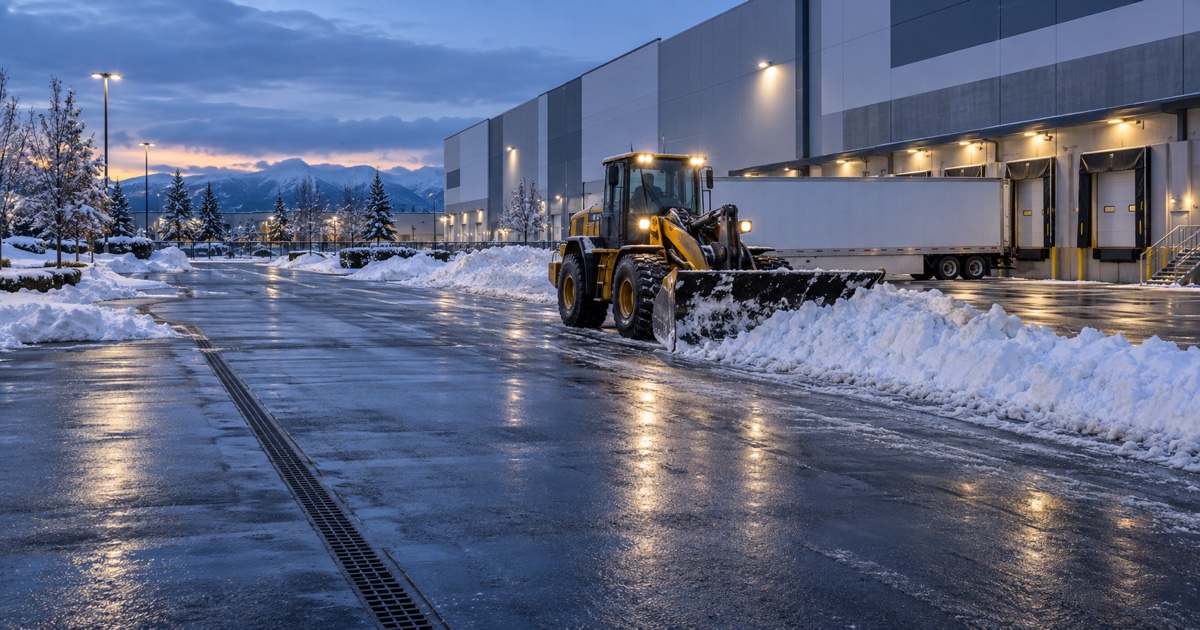
Campbell Heights snow removal is an industrial-access problem before it is a simple plowing problem. A warehouse can have a clear front entrance while trailers cannot reach the loading apron, employees cannot safely cross the parking area, or meltwater is freezing beside a dock stair. The useful winter plan therefore maps the whole operating route—from the public frontage to the last loading position—and assigns an order to the work.
This guide supports our main Campbell Heights snow removal page with a practical plan for warehouses, distribution centres, manufacturing properties, flex-industrial strata and multi-shift workplaces.
Campbell Heights Is a Large Industrial Service Area
The City of Surrey's Campbell Heights Local Area Plan describes an employment area of about 798 hectares, or 1,971 acres, generally east of 184 Street, south of 44 Avenue and west of 196 Street near the Langley border. The City identifies business-park and industrial uses as the area's defining land uses.
That scale matters during a snow event. Campbell Heights contains large parcels, long internal roads, employee lots, truck courts and multiple access gates. A quote based only on the building address can miss most of the surfaces that keep the operation working.
The City also describes Campbell Heights as one of Surrey's largest industrial and commercial hubs, with more than 7,000 jobs. A winter plan has to respect that daily movement. The goal is not merely a clean-looking lot; it is dependable access for people, deliveries and emergency response.
Surrey's Sidewalk Deadline Still Applies
The City of Surrey's winter snow and ice guidance asks property occupants to clear sidewalks around their property before 10 a.m. after a snowfall. The current City page also lists daily fines for uncleared sidewalks, including a business rate.
The official City page should always be checked for the current rule and fine schedule. Operationally, the key point is that the public frontage cannot be forgotten while equipment is working on the larger private lot. Long industrial frontages, staff entrances and transit approaches should be measured and assigned to the hand-clearing portion of the route.
Start With an Industrial Surface and Traffic Map
Before winter, divide the property into operating zones. A strong Campbell Heights plan normally marks:
- Primary and secondary fleet gates
- Inbound and outbound truck lanes
- Trailer turning areas and staging positions
- Loading-dock aprons and dock approaches
- Employee and visitor parking aisles
- Fire lanes and emergency-service access
- Public sidewalks and pedestrian connections
- Staff entrances, stairs and accessible routes
- Catch basins, trench drains and low points
- Approved snow-storage areas and relocation access
The map should also show one-way circulation, security gates, overhead clearances, vehicle-charging equipment and any surface that cannot support heavy machinery. This gives the operator a repeatable route and helps the site manager identify which areas must be empty before service begins.
For wider commercial planning, see our commercial snow clearing service. Industrial strata councils can also use the checklist on our strata snow-removal page.
Build the First Pass Around Site Operations
Not every surface has the same deadline. The first pass should protect the operation that cannot wait. Depending on the property, that may mean opening the employee entrance before a shift change, keeping a fleet gate available around the clock, or clearing a loading apron before the first scheduled arrival.
A practical sequence is:
- Open the designated emergency and primary vehicle route.
- Clear the critical fleet gate and inbound truck lane.
- Open the priority loading aprons and turning areas.
- Establish a continuous pedestrian route from parking to the staff entrance.
- Clear public sidewalks, accessible paths and exterior stairs.
- Open catch basins and trench drains before placing final piles.
- Clear secondary parking and non-critical yard surfaces.
- Apply the specified ice-control product and schedule any return check.
This order must be matched to the actual site. A food-production facility, a distribution warehouse and a flex-industrial strata may all use different first-pass priorities even when their lot sizes are similar.
Loading Docks Need Their Own Snow Zone
Loading areas combine concentrated truck traffic, shaded pavement, dock stairs, bumpers, wheel paths and frequent door activity. Snow pushed toward the building can block dock equipment or melt across the apron. Slush compacted by trailer tires can become a hard ridge that is difficult to remove later.
The dock plan should answer:
- Which positions must remain available during service?
- Can trailers be moved before the crew arrives?
- Where may snow be placed without narrowing the turning radius?
- Which stairs, guardrails and pedestrian doors require hand work?
- Where are the dock drains and roof-discharge points?
- Is a follow-up scrape or ice treatment needed after trailer movement?
If the operation is continuous, the contractor and site manager need a communication method for temporarily closing one section while keeping another section open. Trying to clear around every moving trailer at once creates incomplete work and unnecessary risk.
Keep Truck Lanes Wide Enough for the Next Movement
A route can appear plowed but still be too narrow for safe trailer movement. Snow banks reduce turning space and can hide curbs, hydrants or drainage structures. The pre-season map should record the required travel width at corners, gates and dock approaches.
Operators also need a clear rule for parked trailers, containers and temporary storage. If an obstruction prevents full-width clearing, it should be reported so the site can move it before the next pass. The service record should distinguish between a completed lane and an area that could not be finished because access was blocked.
Plan Snow Storage Before the First Event
Large industrial lots generate large volumes of plowed snow. The first convenient corner may not remain suitable after multiple events. A pile can eventually block sightlines, reduce employee parking, cover a catch basin or restrict a trailer swing.
Rank primary and overflow storage areas before winter. The plan should identify the point at which snow relocation or hauling needs approval. It should also protect hydrants, utility cabinets, loading equipment, landscaping and stormwater features.
Snow should not be pushed into the street, onto a public sidewalk or across a neighbouring property. Storage is part of the operating plan, not something to decide after the lot is already full.
Drainage and Refreeze Can Stop a Site After Plowing Ends
Campbell Heights properties often have long paved grades, trench drains and broad low points. Daytime melt can travel across a truck lane or employee walkway and freeze after the crew leaves. A single blocked drain can create more ice than the original snowfall.
After the first pass, inspect:
- The downhill side of loading aprons
- Trench drains across gates and ramps
- Catch basins beside snow-storage areas
- Roof runoff near staff and shipping entrances
- Wheel paths where trucks compact slush
- Shaded pedestrian routes between parking and the building
Ice control should support the drainage plan. Applying more product does not fix a buried drain or a pile that continuously sends meltwater across the route.
Match Equipment to Acres, Access and Detail Work
Large lots and long truck lanes may require loaders or larger plowing equipment for an efficient first pass. Compact equipment can work around loading positions and narrow service areas. Hand crews or snow blowers remain necessary for entrances, stairs, sidewalk connections and tight pedestrian zones.
The quote should define the surfaces and required result instead of promising one machine for the entire site. It should also identify where equipment can stage, refuel or wait without interfering with security and freight movement.
Document the Visit for the Site Manager
A useful industrial service record can include:
- Arrival and departure times
- Weather and observed pavement conditions
- Gates, lanes, docks and pedestrian routes completed
- Ice-control product and treatment zones when included
- Obstructions, parked trailers or inaccessible areas
- Drainage or refreeze concerns reported to the client
- Photos of the critical operating routes
Consistent records help the manager confirm service, improve the next pass and explain why a particular area remained restricted. For dispatch and reporting options, review the PlowWow snow-removal management system.
Questions to Settle Before Signing the Contract
Ask for clear written answers to these points:
- What accumulation or surface condition triggers automatic service?
- Which shift changes, deliveries or opening times control the first pass?
- Which gates, docks and fire routes are always critical?
- Who moves trailers and parked vehicles before service?
- Are sidewalks, stairs and employee entrances included?
- Which areas receive ice control, and is product included?
- When is a return visit required for refreeze?
- Where can snow be stored, and who approves relocation?
- What happens when security access or a gate code fails?
- What service record will the property receive?
The older Campbell Heights strata and commercial snow-plowing guide provides additional seasonal-contract context. This page focuses on the physical operating route that should sit behind that contract.
Frequently Asked Questions
What should Campbell Heights industrial properties clear first?
The answer depends on the operation, but the first pass usually protects the primary fleet gate, critical truck lane, required loading positions, fire access and a continuous pedestrian route from employee parking to the building.
Do Campbell Heights businesses have to clear public sidewalks?
The City of Surrey asks occupants to clear sidewalks around their property before 10 a.m. after snowfall. Confirm the current rule and enforcement information on the City's official snow and ice page.
Can one pickup plow handle a large Campbell Heights property?
Equipment must be matched to the measured surface area, snowfall, timing and access constraints. Large truck yards and long internal roads may require heavier equipment, while entrances and tight loading details still need smaller equipment or hand work.
Why schedule a refreeze inspection after the lot is clear?
Meltwater can cross truck lanes and pedestrian routes, then freeze after temperatures fall. Sites with shaded pavement, blocked drainage or roof runoff may require a return check even without new snow.
Request a Campbell Heights Site Plan
Call 604-761-1518 or use the PlowWow quote form for a measured Campbell Heights plan covering gates, truck lanes, loading docks, employee routes, drainage and snow storage. We can quote the operating surfaces that matter instead of treating an industrial site like an oversized parking lot.