
By the PlowWow team · November 24, 2026
A broken curb, raised drain grate, or loose wheel stop is easy to spot in daylight. Under a few centimetres of snow, it can disappear. Before the first storm, ask your snow removal contractor to walk the property with you, photograph the pavement, and flag anything that could change how the crew plows, shovels, or salts the site.
For a Greater Vancouver strata or commercial property, that walkthrough should leave you with dated photos, a marked site map, and a plan for each trouble spot.
Photograph the asphalt and curbs while they’re visible
Start with wide shots of entrances, parking rows, loading bays, sidewalks, and parkade ramps. Then get close-ups of broken curbs, potholes, raised asphalt patches, loose wheel stops, and drain grates that sit above the pavement. A low island that’s obvious in daylight can be hard to see from a plow cab at night.
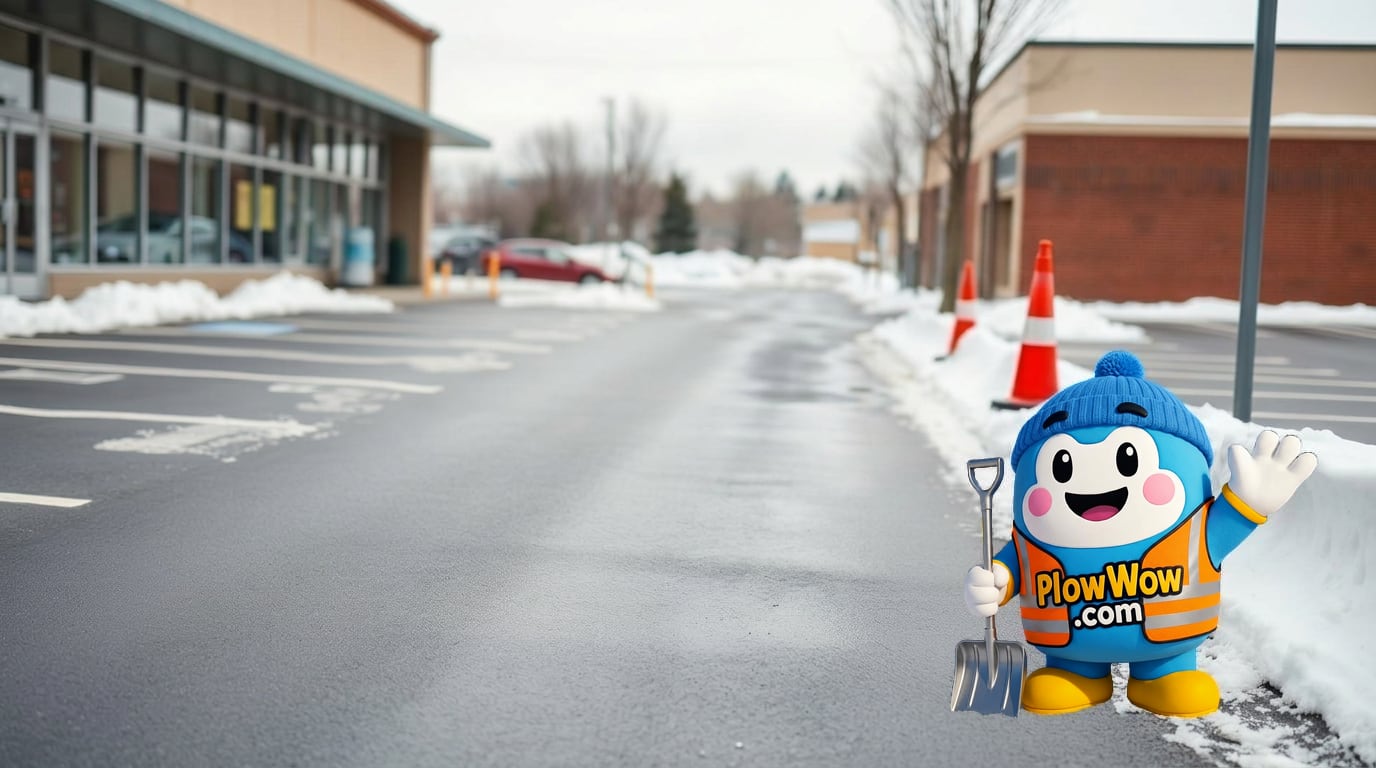
PlowWow illustration of a wide site photo showing the drive lane, parking rows, and entrances in the same frame.
Take one photo that shows where the problem is and another that shows what’s wrong. Label it in terms a relief operator will recognize, such as “visitor parking entrance, curb beside the first stall.” See the CCOHS outdoor inspection checklist for more items to look for.
Tell the strata what needs attention
Put each trouble spot on the site map and agree on what to do before the first callout. A loose wheel stop might need repair. A low island might need reflective markers. A raised grate might need a marked buffer until it can be fixed. Send the photos and map to the strata manager and crew lead so both have the same information.
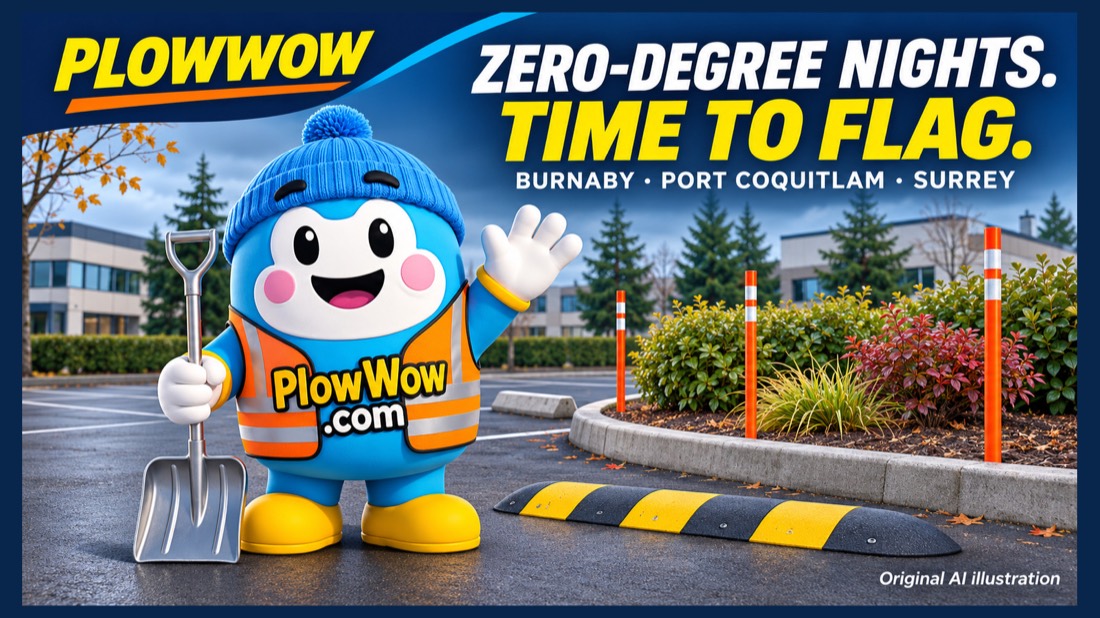
PlowWow illustration of a raised curb with reflective markers beside a speed bump. Mark both on the crew’s site map.
Take another look after heavy rain. Check where water pools at a parkade entrance or crosses a walkway. Those spots deserve a second look when temperatures drop. Agree on where to pile snow so it stays clear of drains, accessible ramps, and driveway sightlines. The City of Vancouver’s winter maintenance guidance also calls for keeping storm drains clear.
What we spotted on a nighttime salting visit
While salting one night, our PlowWow crew noticed a pothole in the asphalt. We took a photo and emailed it to the strata so they could see the damage and decide how to follow up before snow covered it.
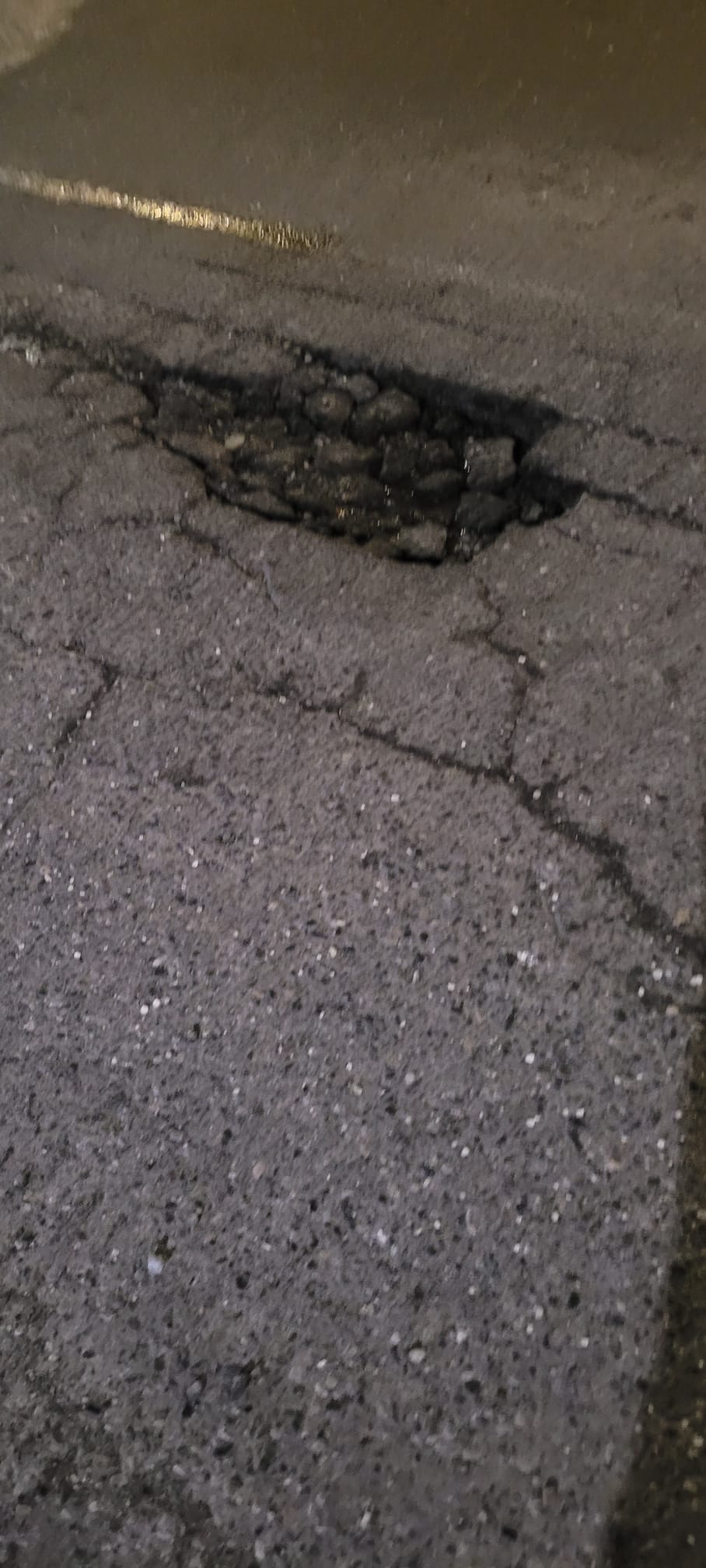
PlowWow field photo shared with the strata after a nighttime salting visit.
The preseason walkthrough gives your contractor a baseline. During the season, ask the crew to email a dated photo and the exact location whenever they spot a new issue. If it affects the next plow or salting visit, update the route notes so the next operator knows what to expect.
One question to ask before the first storm
“Can you show me the photos, the trouble spots you flagged, and what your crew will do about them?”
Manage a strata or commercial property in Greater Vancouver? Talk to PlowWow about a preseason walkthrough. Bring any notes on recent paving, drainage problems, or spots that caused trouble last winter.