
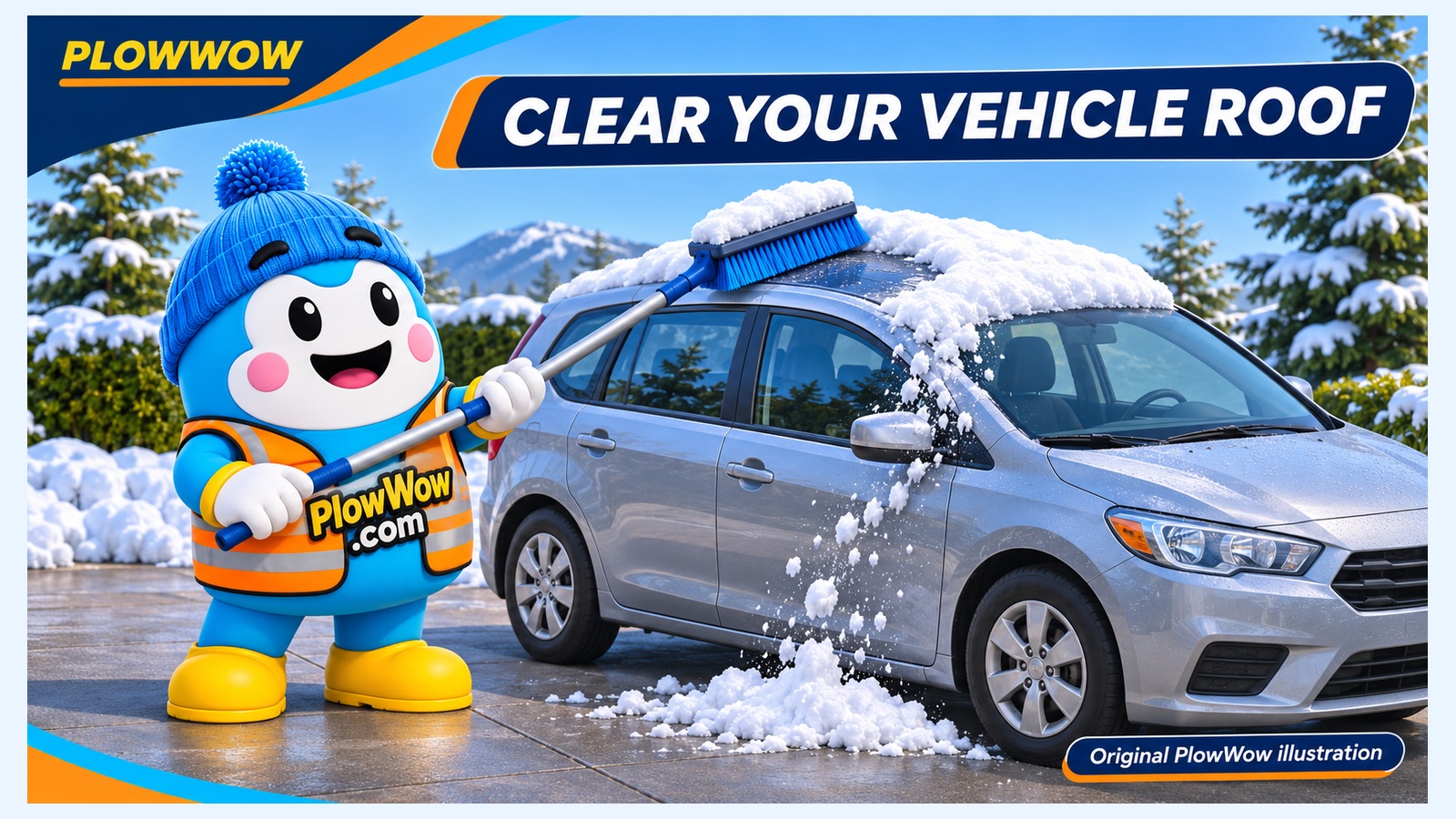
Original AI-generated PlowWow safety illustration using the canonical Wow character. Imagined parked vehicle and winter setting; not a photograph of a Vancouver incident, current snowfall or a customer service visit.
By the PlowWow team · November 12, 2026 · Winter road safety
Before you drive, clear the snow off the roof of your vehicle—not just the windshield.
Snow left overhead can lift into the airflow as you travel and blow back towards the vehicle behind you. That drifting cloud can obscure another driver's view just when they need to see the road, a brake light or a pedestrian. Don't use the journey as a way to clear the roof.
For Vancouver residents heading out after snow has accumulated, the preparation starts while the car is still parked. Allow time to clear it before you leave.
Your roof snow becomes someone else's visibility problem
The Government of Québec's winter-driving guidance warns that flying vehicle snow and ice can reduce other road users' visibility and damage vehicles. The same physical hazard matters on a Vancouver neighbourhood street or a Lower Mainland highway: the driver behind you should not have to look through the snow you chose to leave on top.
Locally, Richmond RCMP's winter-safety reminder tells drivers to remove snow and ice from the whole vehicle, specifically including the roof, windows, mirrors and lights. ICBC's Lower Mainland advice also calls for removing accumulated vehicle snow before driving, including headlights, wheel wells and external collision-warning sensors.
A clear windshield gives you a view ahead. A cleared roof helps avoid creating a hazard behind.
A practical check before you leave
- Stay parked and work from the ground. Choose secure footing away from moving traffic. Use a vehicle snow brush with enough reach for the roof; don't climb onto the vehicle or balance on a wheel or bumper. If you cannot reach and clear it safely, arrange suitable help before driving.
- Start at the roof, then work down. Brush accumulated snow from the roof, hood and rear deck or trunk, where fitted, before finishing the glass. Clearing only the wiper-swept patch is not a full vehicle check.
- Clear the view all around. Remove snow and ice from the windshield, side windows, rear window and mirrors. Let the defroster clear interior fog or frost before setting off.
- Check what others need to see. Make sure the headlights, taillights, indicators and licence plates are visible. Check cameras and external sensors as directed by the vehicle manufacturer; they do not replace a clear view through the windows.
- Walk around once more. Look for snow left on the roof or other upper surfaces, then confirm the glass and lights are clear before you move.
CAA-Québec's vehicle-clearing guide recommends a brush suited to the vehicle's size, including a telescopic brush for an SUV, and working from the roof down. It cautions against hot-water shortcuts and against using an ice scraper directly on the bodywork. Follow your vehicle's care instructions rather than forcing ice off painted panels or seals.
Clearing the car is only the start
A cleared vehicle still needs a careful driver. Check DriveBC for your route, allow extra time and leave more space in poor conditions. ICBC advises smooth, gradual steering, acceleration and braking on slippery roads. If the trip can wait until conditions improve, consider delaying it.
PlowWow's reminder is simple: brush the roof before the road. Help the driver behind you see, too.
Sources checked November 12, 2026
- Richmond RCMP: winter weather safety, December 17, 2025. Local whole-vehicle clearing advice.
- ICBC: Lower Mainland winter-driving advice, January 6, 2022. Established preparation and driving guidance, not a current weather alert.
- Government of Québec: clear snow off your vehicle. Vehicle checks and the visibility hazard from flying snow and ice.
- CAA-Québec: how to properly clear snow off your vehicle, updated January 20, 2026. Brush selection, clearing order and finish protection.