

Original AI-generated PlowWow editorial illustration using the approved Wow mascot. Imagined scene, not a forecast map, actual property or completed service.
By the PlowWow team · October 29, 2026 · Seasonal news and original local analysis
The exceptional forecast is for the Pacific, not a Langley street
El Niño’s projected strength is the news; a Langley snowfall date is not. WMO’s October 21 statement says the event could be unprecedented, with a late-2026 peak. That conditional outlook does not establish a future local weather event.
The distinction matters when a regional winter headline travels into a conversation about a specific road. A season can lean in one direction while the order and intensity of individual events remain uncertain. Langley’s local road-priority framework provides another reason not to turn the headline into a promised journey: operational priorities can change as conditions change.
A climate signal and a road response are different stories
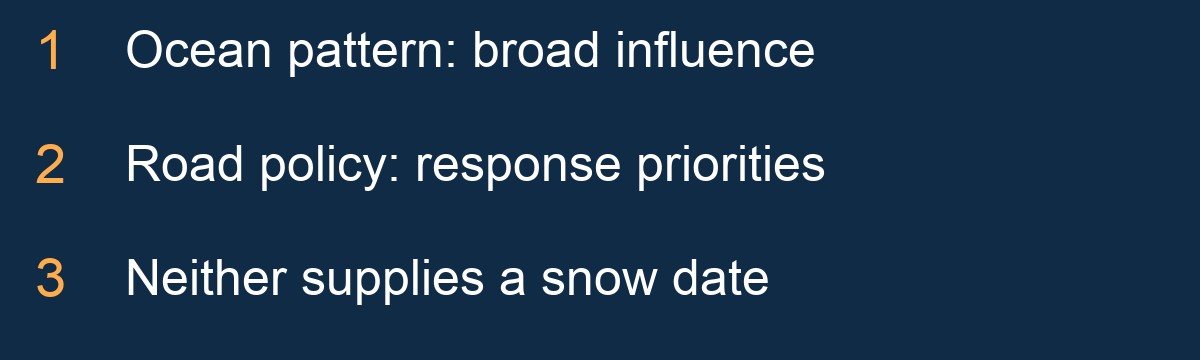
NOAA’s explanation of ENSO weather impacts describes how El Niño can shift the Pacific jet stream and storm track. It is a description of large-scale patterns, not a municipal clearing schedule.
A road response, by contrast, concerns actual conditions and available resources. It would be a category error to infer a clearing time from a tropical ocean index. It would also be wrong to infer this winter’s weather from a road policy alone. The two sources become useful when each is kept in its own role: one explains a seasonal influence, the other explains how an authority describes its response priorities.
The Township’s priority ladder can run backwards
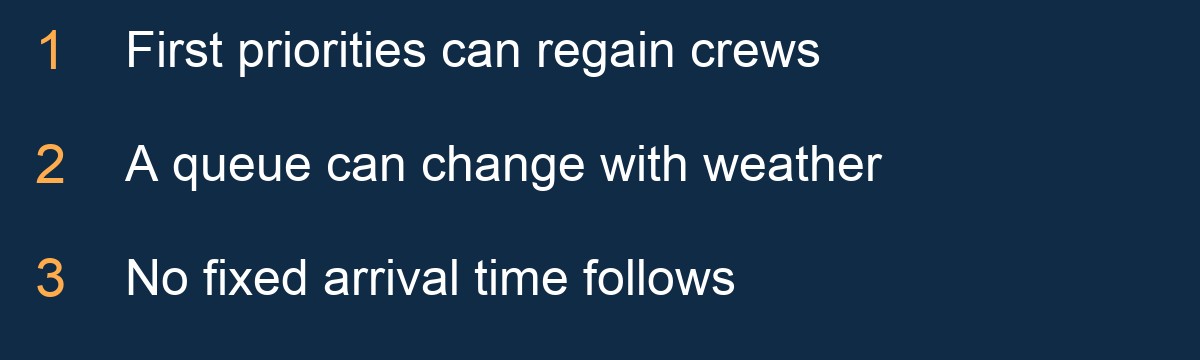
The Township’s current snow and ice page puts major collectors, arterials, school zones, bus routes and hilly areas in first priority. It says resources return to higher-priority routes if conditions deteriorate. That is not a simple one-way queue in which every road receives a guaranteed turn at a fixed time.
This is a useful local fact for understanding future updates. Seeing work repeated on a more important route does not, by itself, prove another road was forgotten. The published framework allows conditions to redirect resources. It does not promise a particular arrival time at a private property or describe a contractor’s accepted scope.
“Langley” still needs a location
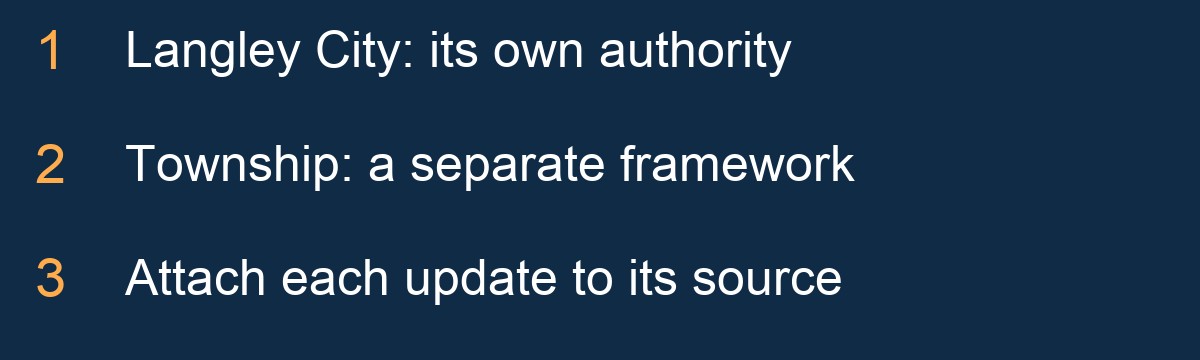
Langley City publishes its own snow and ice control information. It is a separate authority from the Township. A regional headline using the word Langley does not merge the two frameworks.
For a reader following an actual weather event, the useful reporting habit is to attach an update to its authority and location. A statement about a Township priority route should not be retold as a promise about a City street. Likewise, a public-road report does not establish what has happened at a private loading entrance. These distinctions make local coverage specific without inventing an incident or a forecast.
A warmer mean cannot promise an uninterrupted shift
A delivery or opening time is a business fact. Whether weather disrupts it on a future day remains a weather question. The seasonal outlook cannot remove that uncertainty, and a planning article should not pretend otherwise.
The better winter story keeps developing. Watch the dated seasonal updates for the broad signal and current official forecasts for the relevant event. If a headline’s language grows more dramatic, ask whether the underlying source changed or only the adjective did. “Godzilla” belongs to our playful framing; it is not a new official storm category or a claim of a measured PlowWow victory.
Where PlowWow fits
The hero shows Wow at an imagined loading entrance, not an actual Langley customer or equipment commitment. To discuss a real site, prepare an enquiry, call 604-761-1518 or email wow@plowwow.com. Confirm availability and accepted arrangements directly.
See the Greater Vancouver story for the current source timeline, and Port Moody’s pedestrian-route angle for a different local question.